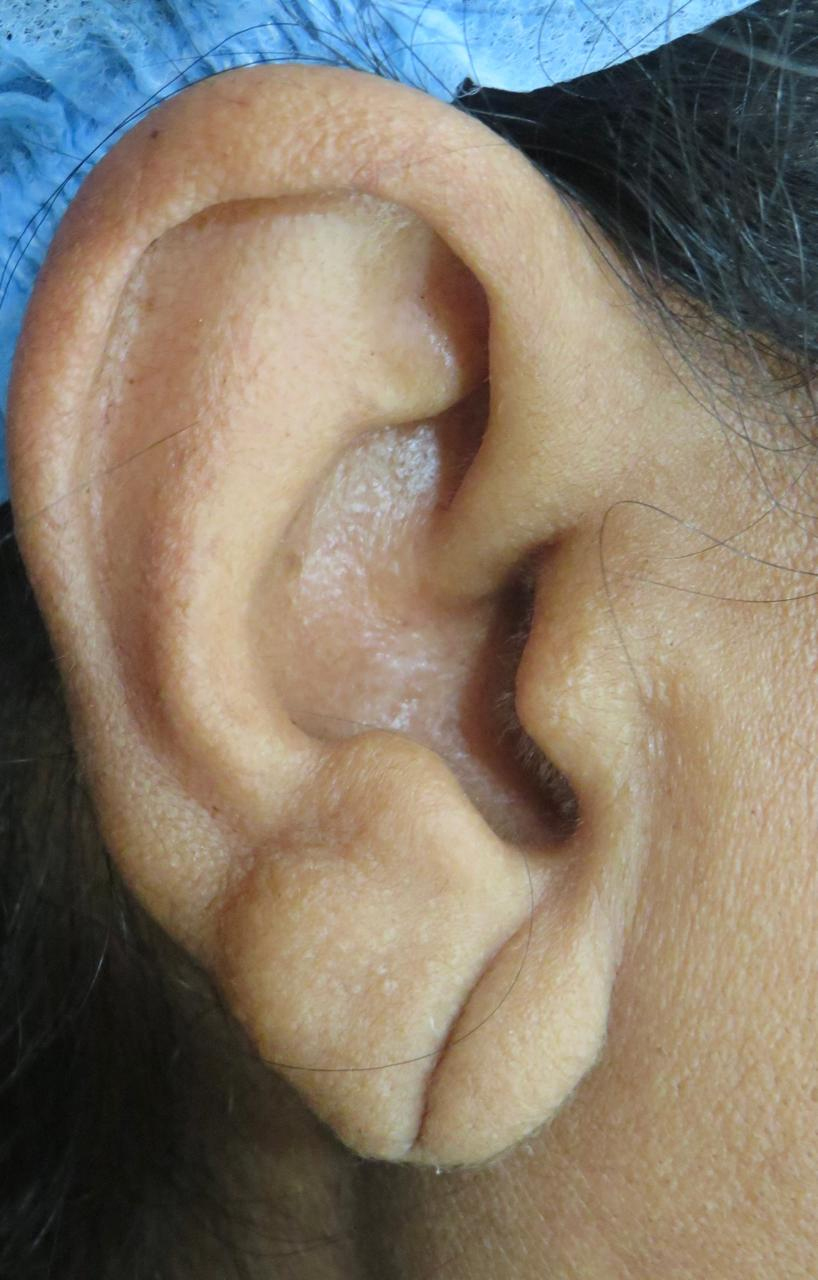


Ear Lobe Repair
Ear lobe repair is a surgical procedure aimed at correcting defects, tears, or stretching in the earlobe, often caused by trauma, heavy earrings, or piercings that have been stretched over time. This procedure is performed for both cosmetic reasons and to restore function or appearance, especially when the earlobe has been damaged or elongated.
Common Reasons for Ear Lobe Repair
- Torn Earlobes: A common injury from accidents, trauma, or pulling on earrings. Torn earlobes may result in a complete or partial tear through the earlobe.
- Stretched Earlobes: This occurs when large or heavy earrings are worn for prolonged periods or when the earlobe is deliberately stretched with gauges or other body modification techniques.
- Piercing Complications: Sometimes, earlobe piercings can become infected, leading to scarring, irregular healing, or hypertrophic scars that may require repair.
- Cosmetic Reasons: Some individuals opt for ear lobe repair to restore a more youthful or symmetrical appearance, especially if the earlobe has become elongated or deformed over time.
Surgical Repair:
- Torn Earlobe: The edges of the tear are carefully cleaned, and the tissue is sutured back together. If there is significant tissue loss or scarring, a small amount of skin may be removed to create a more symmetrical and aesthetically pleasing result.
- Stretched Earlobes: In cases of gauged or stretched earlobes, the excess tissue is trimmed away, and the edges are stitched together to restore a normal appearance. Sometimes, additional techniques may be required to reshape the earlobe.
Non-Surgical Repair:
- Filler or Injection: In some minor cases or for small deformities, injectable fillers (like hyaluronic acid) can temporarily restore the appearance of the earlobe without surgery, although this is not a permanent solution.
The Procedure
- Anesthesia: The procedure is typically performed under local anesthesia, meaning the patient is awake but the area is numbed.
- Duration: The procedure generally takes about 30 minutes to an hour, depending on the complexity of the repair.
- Post-Procedure Care: After the surgery, patients are usually advised to keep the area clean and avoid applying pressure or wearing earrings until fully healed (usually 4-6 weeks).
Recovery and Aftercare
- Pain Management: Any mild discomfort or swelling can be managed with over-the-counter pain relievers.
- Wound Care: It's important to keep the area clean, avoid touching it with unwashed hands, and follow the healthcare provider’s specific aftercare instructions to prevent infection.
- Scar Management: Scar creams or silicone sheets may be used to help minimize scarring after the procedure.